
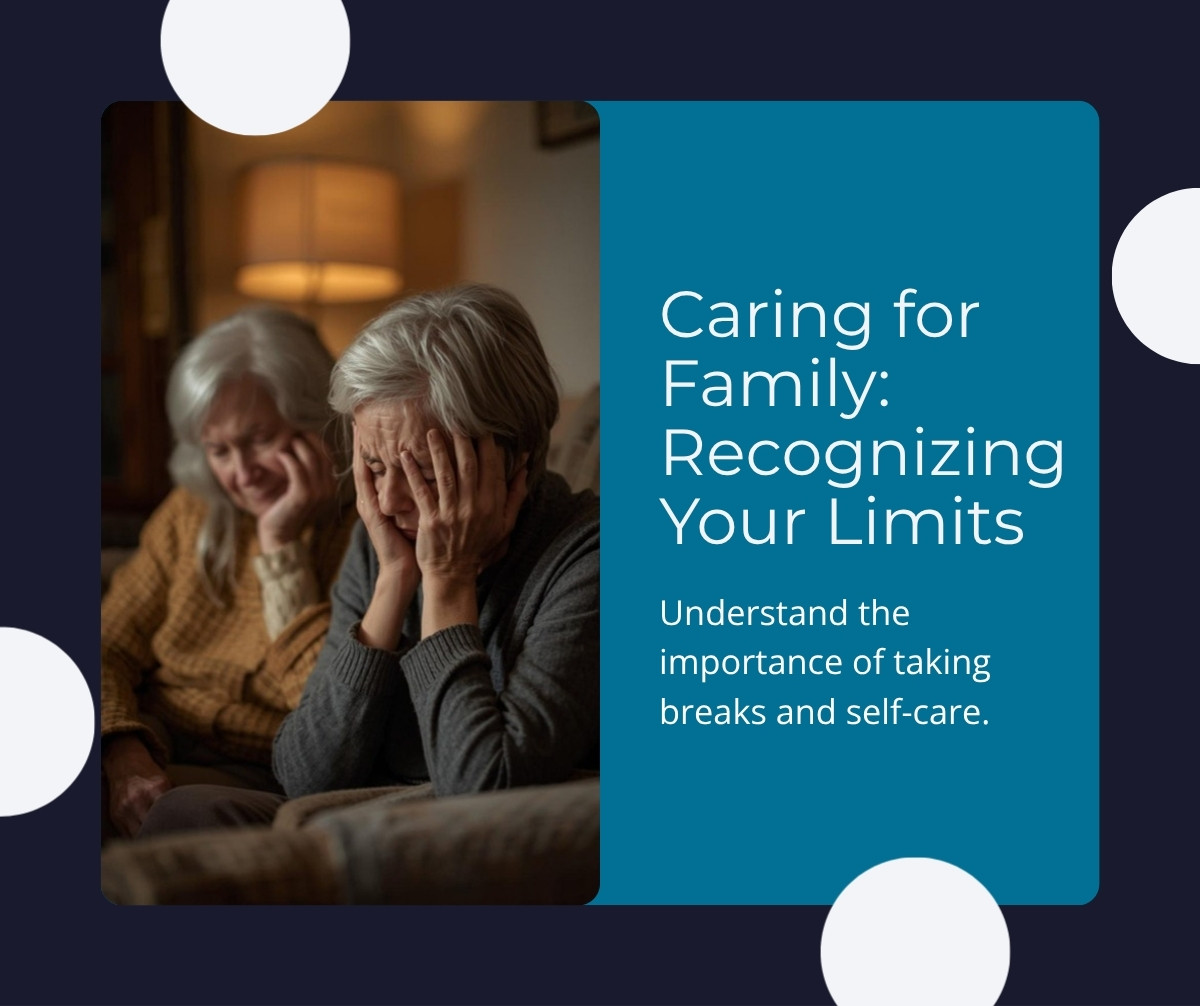
Caring for a family member is one of the most loving things you can do. But it’s also one of the most demanding. Family caregivers in Las Vegas are at significant risk of caregiver burnout — and it builds gradually, often without the caregiver noticing until they’re already depleted. Recognizing the signs early is the key to protecting your health and your ability to provide care.
1. You Feel Exhausted All the Time — Even After a Full Night’s Sleep
Chronic fatigue that persists despite adequate rest is one of the clearest signs of caregiver burnout. When your body and mind are under sustained stress without recovery, sleep alone cannot restore your energy. If you wake up tired every day, take that seriously.
2. You’ve Become Short-Tempered or Emotionally Reactive
Many caregivers are dismayed to find themselves snapping at their loved one or losing patience over small things. This is a classic symptom of burnout — not a character flaw. It means your emotional reserves are depleted and you’re operating in survival mode.
3. You’ve Stopped Doing Things You Enjoy
Have you given up exercise, social activities, hobbies, or friendships since becoming a caregiver? Completely abandoning your own interests and identity is a warning sign. Caregivers who lose themselves in the role are at elevated risk of depression and burnout.
4. Your Own Health Is Being Neglected
Are you skipping your own doctor’s appointments? Eating poorly? Not exercising? Neglecting your own health in order to focus entirely on your loved one’s needs is unsustainable — and ironically, it jeopardizes your ability to provide care. You cannot pour from an empty cup.
5. You Feel Resentment Toward Your Loved One
This is perhaps the most painful sign — a growing sense of resentment toward the person you care for. This is not a reflection of how you feel about them as a person. It is the natural emotional consequence of unsustainable caregiving without adequate rest or support.
What to Do When You Recognize These Signs
The answer is not to push through. It is to get support — specifically, respite care.
Respite care from A-Team Personal Care gives Las Vegas family caregivers a genuine, structured break. A certified caregiver takes over — for a few hours, a day, or longer — so you can rest and return to caregiving with renewed energy and patience.
Call 702-822-1253 or visit our Respite Services page to schedule a free consultation. You deserve support too.
Why Caregiver Burnout Matters — for You and Your Loved One
Caregiver burnout is not just an inconvenience. Sustained burnout produces real, measurable health consequences for the caregiver: higher rates of depression, anxiety, cardiovascular strain, sleep disorders, and weakened immune response. It also produces a quieter consequence: the quality of care given to the senior degrades. When you are exhausted, you are more impatient, less attentive, and more prone to mistakes.
This is the part most family caregivers do not let themselves think about. Getting a break is not selfish — it is the most reliable way to keep your loved one safe in the long term.
Three Deeper Signs People Often Miss
The classic signs (exhaustion, irritability, isolation) are well-known. Three subtler signs:
- Loss of joy in activities you used to like. If you have not done your hobby, gone for coffee with a friend, or watched a movie purely for fun in a month, your bandwidth is gone.
- Resentment toward the person you love. A caregiver who feels resentment is not a bad person — they are a depleted person.
- Catastrophizing about the future. If every conversation about “what if X gets worse” feels unbearable, your nervous system is already maxed out.
What Respite Care Actually Looks Like
Respite care is planned coverage by a trained caregiver while you step away. It can be:
- A few hours, one afternoon a week — enough for an actual lunch, an appointment, or a quiet walk
- A full day every weekend — to rest and reset
- Overnight coverage — so you can sleep through the night
- A weekend or full week — to travel, recover from your own surgery, or just unplug
Most A-Team Personal Care respite plans start small — a few hours per week — and expand as the family realizes how much difference a real break makes. Our full respite care guide walks through how this works.
How to Start the Conversation with Your Loved One
Many family caregivers hesitate because they fear their loved one will feel abandoned. A few framing ideas that have worked for our clients:
- “I want to be a better caregiver for you, and to do that I need to rest sometimes.”
- “Mom, I love taking care of you. I also want to be doing this in five years — which means I need help now.”
- “This is a professional helper coming to spend time with you while I run errands. You will still be in your own home.”
Most seniors, after meeting a consistent, calm caregiver once or twice, accept the arrangement quickly. Continuity matters — the same caregiver every visit makes a much bigger difference than rotating staff.
Las Vegas Resources for Family Caregivers
- Nevada Senior Services — caregiver support groups and (for qualifying families) respite grants
- Cleveland Clinic Lou Ruvo Center for Brain Health — family caregiver resources for those caring for someone with dementia
- Nevada 2-1-1 — connection to local social services
- A-Team Personal Care — in-home respite, 702-822-1253
Frequently Asked Questions
How do I know if I really need respite care?
If you cannot remember the last time you took a real break, you need respite care. Burnout sneaks up slowly — most family caregivers underestimate how depleted they are.
What is the minimum visit length for respite care at A-Team Personal Care?
Two hours. That gives both the caregiver and your loved one enough time to settle in. Shorter visits rarely accomplish the goal.
Will my loved one resist having a caregiver in the home?
Sometimes initially. With a consistent caregiver and a careful introduction, most seniors accept the arrangement within one or two visits.
How quickly can A-Team Personal Care start providing respite?
Usually within 48–72 hours of an initial assessment. Urgent situations can sometimes start same-day.
Does insurance cover respite care?
Long-term care insurance often does. Medicare does not cover non-medical respite. Nevada Medicaid’s Personal Care Services may cover qualifying low-income seniors.
Get Respite Care in Las Vegas
If you recognize yourself in this article, you do not have to figure this out alone. Call A-Team Personal Care at 702-822-1253 or visit our Respite Services page. The first conversation is free, and you decide whether to continue.