
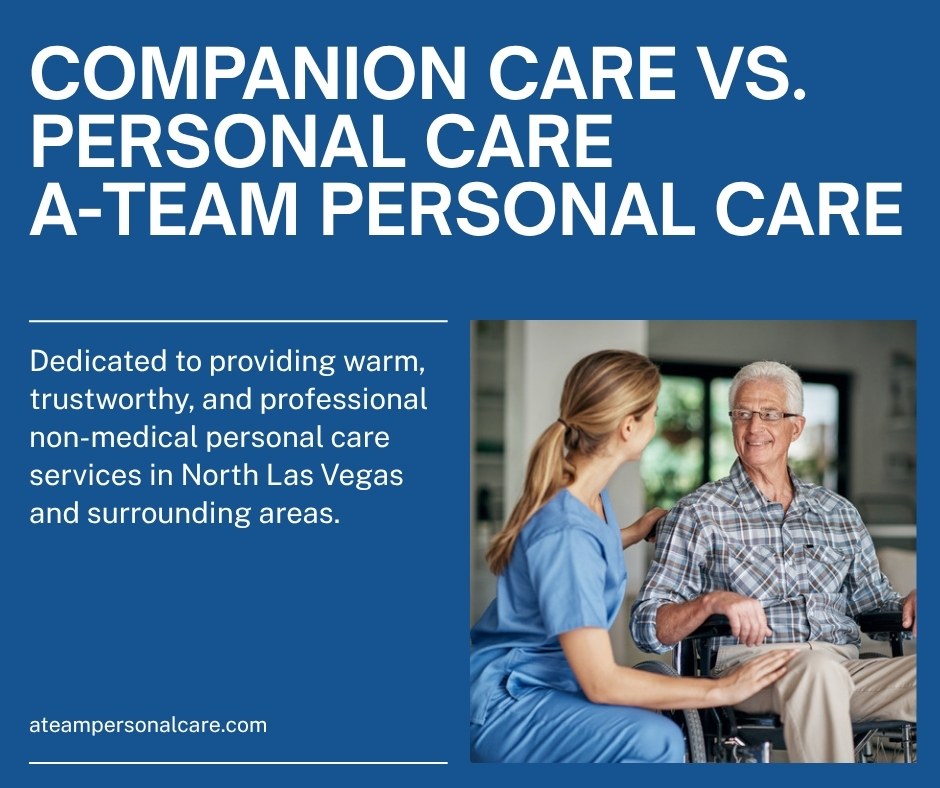
When families in Las Vegas start looking into in-home help for an aging parent, two terms come up again and again: companion care and personal care. They sound similar, they are sometimes provided by the same caregiver, and they are easy to confuse — but they solve different problems. Choosing the right one (or the right mix) is the difference between paying for help your parent doesn’t need and missing the help they do.
This guide explains what each service covers, the signs that point to one or the other, and how many families end up combining them. Both are non-medical services, which means they are about quality of life and daily living — not nursing or medical treatment.
What is companion care?
Companion care is about connection. The defining feature is the relationship, not hands-on physical help. A companion provides a consistent, friendly presence in the home — and for many seniors, especially those who live alone, that presence is the single biggest factor in staying happy and well. A-Team Personal Care’s companion care is built around exactly this kind of regular, caring company.
In a typical visit, a companion might share conversation and a meal, play cards or work on a puzzle, take a walk in the yard, help with a hobby, keep your parent company on an errand, or simply be there so the day doesn’t pass in silence. A companion also keeps an eye on how your loved one is doing and lets the family know if something changes.
Companion care does not include hands-on help with the body (bathing, dressing, toileting) and does not include driving the client — those fall outside its scope. It is the right fit when your parent is largely independent but lonely, under-stimulated, or beginning to seem withdrawn.
What is personal care?
Personal care is about the body and daily routines. A trained caregiver provides hands-on help with the Activities of Daily Living (ADLs) — the core self-care tasks most of us do without thinking. A-Team Personal Care’s personal care services cover this hands-on support, from a two-hour minimum visit up to overnight and around-the-clock shift coverage.
Personal care typically includes help with:
- Bathing, showering, and personal hygiene
- Dressing and grooming
- Mobility, transfers, and fall prevention
- Toileting and continence support
- Meal preparation and eating assistance
- Medication reminders (verbal prompts at the right time — not administering or filling pill organizers, which is a nursing task)
Personal care is the right fit when daily tasks have become unsafe, exhausting, or impossible for your parent to manage alone — after a fall, a hospital stay, or a gradual decline in strength or balance.
Side-by-side: the quick comparison
| Question | Companion Care | Personal Care |
|---|---|---|
| Main focus | Social and emotional wellbeing | Hands-on help with the body |
| Typical tasks | Conversation, activities, errands, supervision | Bathing, dressing, transfers, toileting, meals |
| Best for | A parent who is independent but lonely | A parent who struggles with daily self-care |
| Includes hands-on body care? | No | Yes |
| Medical care? | No (non-medical) | No (non-medical) |
| Driving the client? | No | No |
How to tell which one your parent needs
A few honest questions usually make the answer clear. Lean toward companion care if your parent:
- Lives alone and seems isolated, bored, or low since a spouse passed or friends moved away
- Is physically capable but has stopped doing the hobbies and outings they used to enjoy
- Is generally safe at home but you worry about them being alone all day
Lean toward personal care if your parent:
- Is skipping showers, wearing the same clothes for days, or struggling to dress
- Has had a fall, or seems unsteady moving around the house
- Is losing weight or not eating because cooking has become too hard
Many families need both
In practice, the line is rarely clean — and that is fine. A common pattern is a parent who needs help bathing in the morning and also needs company during the long afternoon. Because A-Team Personal Care’s caregivers can provide both within the same visit, you don’t have to choose a single label; we build the visit around the actual needs. If hands-on needs grow, our attendant (PCA) services bundle personal care with daily assistance into a sustained block of caregiver time.
It is also common for needs to shift over time. Many families start with companion care, then add personal care as routines get harder — or start with personal care after a hospital stay and keep a companion element for wellbeing. A good agency adjusts the plan as your parent changes, which is part of how we approach getting started with in-home care.
A note on scope: A-Team Personal Care is non-medical. Neither companion care nor personal care includes nursing, medical procedures, or transportation. When medical care is needed, we are glad to work alongside your family’s chosen home-health or hospice provider.
Talk it through with A-Team Personal Care
If you are not sure which your parent needs, that is exactly what a free assessment is for. We will visit, listen, and recommend honestly — even if that means starting small.
Call (702) 822-1253 or request a free assessment on our contact page.
Frequently Asked Questions
Is companion care cheaper than personal care?
Companion care is often a lighter level of support, but the right choice depends on what your parent actually needs, not price alone. The best way to compare is a free in-home assessment, where we recommend the level of care that fits.
Can the same caregiver do both companion and personal care?
Yes. A-Team Personal Care caregivers can provide companionship and hands-on personal care within the same visit, so the plan can flex as needs change without juggling multiple providers.
Is either service medical care?
No. Both companion care and personal care are non-medical. We provide medication reminders but do not administer medications, perform clinical procedures, or provide nursing or transportation.
My parent refuses help — is companion care a good first step?
Often, yes. Many seniors accept a friendly companion more easily than hands-on help. Companionship can build trust first, making it easier to add personal care later if needed.
What is the minimum visit length?
Two hours. From there, scheduling is flexible, up to overnight and around-the-clock shift coverage.